Employment Opportunity – General Manager

The Anishinabek/Ontario Fisheries Resource Centre (A/OFRC) is seeking a visionary General Manager to lead our dedicated team, manage daily operations, and guide the strategic direction of our organization.

Reporting to the Board of Directors under the general supervision of the Chair, the General Manager provides support in the administrative and operational aspects of the Centre’s activities and functions. The position handles administration tasks such as maintaining employee records, promoting initiatives and projects, supporting employee relations, and collaborating with the office manager. The General Manager will provide technical leadership to the operations of the corporation and will be responsible for the coordination, development, implementation, and execution of project deliverables and reporting, as well as seeking additional funding opportunities that will support the goals and objectives of the A/OFRC.

The A/OFRC is a not-for-profit corporation established by agreement between the Grand Council Chief of the Anishinabek Nation and the Ontario Minister of Natural Resources to further the knowledge and conservation of fisheries resources of interest to the Anishinabek First Nations.

See the job notice for further details and to apply.
New Link – Fishbook

A link to Fishbook – Fisheries Collaboration Network, has been added to the Links page under the AFS Social Networks category. Development of Fishbook was funded by a multi-state grant in order to increase communication and collaboration in the fisheries research and management community. Fishbook consists of two main areas: Projects and Groups.

Volume XXIII, Issue I – The Lateral Line

HIGHLIGHTS:

2025 AFS-OC AGM & Conference Summary – Silviya Ivanova
Student Subunit Update
AFS-OC Comment on Proposed Changes to ESA
Invasive Crayfish, Old and New – Sam Turner
The Fish Life List: Obvious or Obscure? – Sarah Steele
From the Lab – Jacob Lasci
Fish Focus – Rainbow Smelt – Siobhan Ewert
Book Review – Ignition: Lighting Fires in a Burning World. By M.R. O’Connor, and The Summer Canada Burned: the Wildfire Season that Shocked the World. By Monica Zurowski and Postmedia – Ross Claytor
2025 AFS-OC AGM Sponsors

Download

Plight of the endangered Redside Dace (Clinostomus elongatus) in Canada: end of the road?

AUTHOR(S): Donald A. Jackson and Nicholas E. Mandrak

CITATION: Jackson, D.A. and N.E. Mandrak. 2025. Plight of the endangered Redside Dace (Clinostomus elongatus) in Canada: end of the road?. Can. J. Fish. Aquat. Sci. https://doi.org/10.1139/cjfas-2024-0391

Read more

News – DFO’s new Offsetting Policy and Position Statement for the Consideration of Cumulative Effects

Fisheries and Oceans Canada’s (DFO) Fish and Fish Habitat Protection Program (FFHPP) has released a new Offsetting Policy and Cumulative Effects Position Statement. The Policy for Applying Measures to Offset Harmful Impacts to Fish and Fish Habitat and the Position Statement on the Consideration of Cumulative Effects in Support of Decision Making on Fisheries Act Authorizations Concerning Fish and Fish Habitat Protection are now available on DFO’s Projects Near Water website. These documents contribute to FFHPP’s efforts to conserve, protect and restore fish and fish habitat for future generations in a way that respects Indigenous rights and supports sustainable development. Both documents provide additional clarity for partners and project proponents.

The Offsetting Policy provides direction on undertaking effective measures to offset death of fish and the harmful alteration, disruption or destruction of fish habitat, consistent with the fish and fish habitat protection provisions of the Fisheries Act. FAQs and a summary of key changes between the 2025 and the 2019 versions of the Offsetting Policy are also available, as well as our 3-page tip sheet Project planning: What is offsetting and how to prepare an offsetting plan. We will be issuing further guidance to support the Offsetting Policy later in 2025, specifically the guidelines for establishing and managing fish habitat banks, guidelines for the development of an offsetting plan, and policy guidance related to the program’s Risk Management Framework and when avoidance, mitigation and offsetting measures are applied.

The Cumulative Effects Position Statement is designed to provide further clarity on the department’s approach to the application of the relevant fish and fish habitat protection provisions of the Fisheries Act during the project authorization decision-making process. It supports decision makers as they consider the cumulative effects of a project, in combination with all other relevant stressors on fish and fish habitat. FAQs on the Position Statement are also available.

Ontario Streams Backpack Electrofishing Training

Ontario Streams offers electrofishing training courses, in spring and fall sessions. These courses are intended for students and professionals who will be involved in stream surveys and fisheries management.

The main focus is to ensure the safe use of the backpack electrofishing units. The course will cover: electrical theory, safety measures, and an in-field practical where you will demonstrate safe implementation in the field.

See current Backpack Electrofishing Crew Lead Training Course for more information and to register.

ECOPA Natural Resources Training

Ecopa Environmental provides training programs (including backpack electrofishing certification) designed to give industry professionals, government agencies, First Nations, academic institutions, community partners, and students hands-on experience and expertise in natural resource management See current Natural Resources Training opportunities.

News – DFO FFHPP Risk Management Framework

Fisheries and Oceans Canada’s (DFO) Fish and Fish Habitat Protection Program (FFHPP) has released its Risk Management Framework Overview on the Talk Fish Habitat website.

This overview:

  • provides information about FFHPP’s risk management approach
  • serves as a foundation for future engagement on policies, guidance and tools related to how DFO manages risks to fish and fish habitat
  • communicates the status of the FFHPP’s Risk Management Framework in the context of the implementation of the Fisheries Act (2019), the Species at Risk Act, the Aquatic Invasive Species Regulations and the United Nations Declaration on the Rights of Indigenous Peoples Act

This overview document will also be posted on DFO’s Projects Near Water website.

All Too Clear: Beneath the Surface of the Great Lakes

All Too Clear uses cutting-edge underwater drones to explore how quadrillions of tiny invasive mussels are re-engineering the ecosystem of North America’s Great Lakes at a scale not seen since the glaciers. The mussels are trapping nutrients, the building blocks of life, on the lake bottom. Without nutrients, organisms of all kinds – from the tiniest plankton to the largest fish – are vanishing, creating vast biological deserts. While the consequences for nature and people are severe, the loss of life has had an extraordinary side effect: it’s made the lakes far clearer than they’ve ever been before. We’ve harnessed this newfound clarity to capture animal behaviours and freshwater environments that have never been filmed before.

All 3 “All Too Clear” episodes are now streaming Canada-wide on TVO Today Docs.

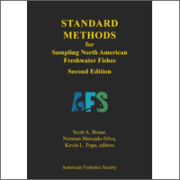
Standard Methods for Sampling North American Freshwater Fishes, second edition

Standard Methods for Sampling North American Freshwater Fishes, second edition provides standard sampling methods recommended by the American Fisheries Society for assessing and monitoring freshwater fish populations in North America. Methods apply to ponds, reservoirs, natural lakes, and streams and rivers containing cold and warmwater fishes. Range-wide and eco-regional averages for indices of abundance, population structure, and condition for individual species are supplied to facilitate comparisons of standard data among populations. Provides information on converting nonstandard to standard data, statistical and database procedures for analyzing and storing standard data, and methods to prevent transfer of invasive species while sampling.

Read more