Theme: Fish, Fur, and Feathers: Science Across Ontario’s Ecosystems
March 21-23, 2025, University of Guelph, Ontario
The 2025 Ontario Chapter of the American Fisheries Society Annual General Meeting and Conference was held March 21-23rd. The meeting was hosted at the University of Guelph in partnership with the Ontario Chapter of The Wildlife Society (OCTWS) and was very well received by members of the two societies and all other attendees. The theme “Fish, Fur and Feathers: Science across Ontario’s Ecosystems” encompassed aquatic and terrestrial wildlife and provided a holistic exposure and discussion of research on a variety of different species and topics for attendees. Apart from the number of excellent presentations, the meeting offered workshops, networking and sharing opportunities.
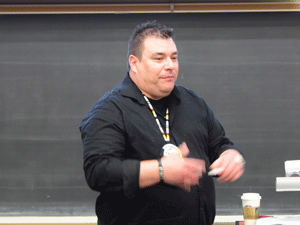
The meeting was both initiated and concluded with a traditional Indigenous ceremony performed by elder Gary Pritchard. In keeping up with the principles of the Diversity and Inclusion Subcommittee, Indigenous participation and perspectives were welcomed aiming to bridge communication gaps, foster inclusivity and engagement, and encourage equity in the natural sciences. The ceremonies were well-attended, with high levels of engagement and both continuing well past the scheduled time.
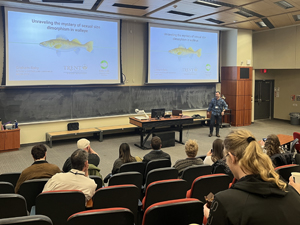
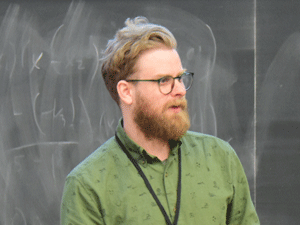
The meeting hosted three keynote speakers who highlighted the meeting’s theme with topics on fish physiology and bioenergetics and caribou conservation. Dr. Sarah Alderman’s (University of Guelph) talk “Comparative physiology of marine and freshwater fish” highlighted her work in the West Coast on the effects of diluted bitumen on the early life-stages of salmonids, and in the Great Lakes on the lasting physiological response of lake trout to sea lamprey parasitism. The presentation of Dr. Quinn Webber (University of Guelph) titled “Caribou ecology, behaviour and management in Canada”, provided the audience with overview of the anthropogenic and natural threats facing caribou populations across Canada, and highlighted his ongoing work in Ontario. Dr. Graham Raby’s (Trent University) presentation was titled “Unravelling the mystery of sexual size dimorphism in walleye” and excited and inspired the attendees with accelerometer tagging data on energy expenditure and activity behaviour in the wild for these species. All keynote speakers provided engaging large-scale perspectives into the research initiates in Ontario for both aquatic and terrestrial animals.
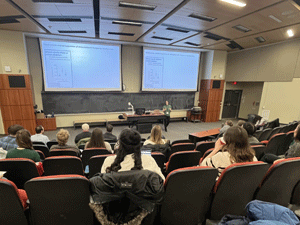
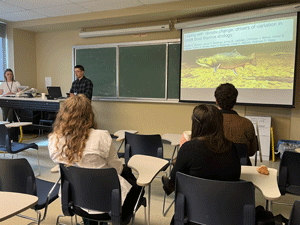
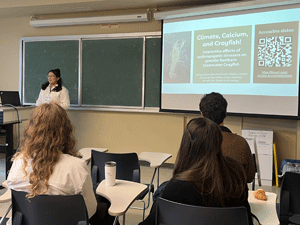
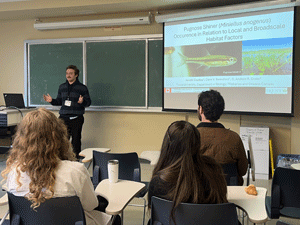
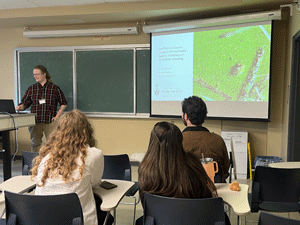
The Program (both oral presentations and posters) included research on topics ranging from bioenergetics, conservation, invasive species and novel technologies among others. The poster session in particular, apart from exciting science, provided further opportunities for research-focused interaction and networking among all attendees. Abstracts for all presentations can be found within the 2025 Joint OCTWS/AFS-OC Conference Program.
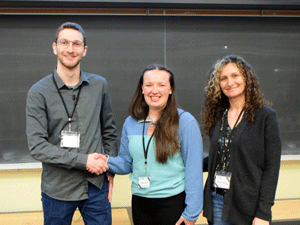
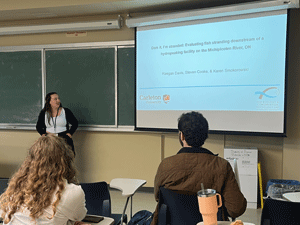
The high quality of oral and poster session presentations made the judging for awards challenging. The 2025 winner of the E.J. Crossman Award was Raegan Davis from Carleton University for her presentation on fish strandings downstream of hydropeaking facilities. In the poster category,
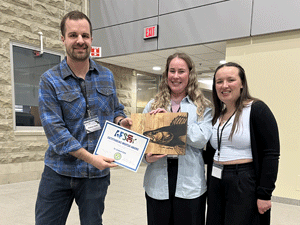
the Al Dextrase Award for best student poster presentation went to Jacob Lasci from Western University with his poster titled “Effects of introduced salmonids on native lake trout in Lake Huron ”.
The Outstanding Mentor Award, the purpose of which is to recognize a fisheries professional who has contributed to an improved experience, such as networking, intellectual support, encouragement and training opportunities, for AFS-OC students or young professionals was given to Dr. Graham Raby, Trent University. The award was announced at the Meeting by Ontario Chapter Student Subunit President Raegan Davis.
Attendees of the VHF Telemetry workshop learned the principles of VHF radio telemetry – from basic signal theory and the components that make up a radio telemetry system, to current monitoring applications. Attendees also had the opportunity to use radio telemetry equipment and practice techniques such as homing and triangulation to find transmitter locations around the property.
Participants of the R workshop were introduced to the statistical software R. This workshop was geared towards people interested in learning R, with little to no previous experience. Attendees worked through a pre-designated data set and went through the basics of data “wrangling” and plot creation.
The AGM Social event was packed with games and mini breakouts allowing for semi-organized, semi-spontaneous fish chats, laughs and learning. The customary AFS-OC Student Subunit Raffle was this year replaced by a Silent Auction. The great variety of prizes among which were a couple of beautiful originals of Indigenous art and a workshop at the Royal Ontario Museum (graciously provided by some of our sponsors) had the excitement build with bidding wars up until the very end of the auction and lots of laughs at the end.
The 2025 AFS-OC/OCTWS Annual Meeting showcased the great science and research undertaken in Ontario in both aquatic and terrestrial sciences and allowed for excellent networking and sharing opportunities. The organizing committees of both societies would like to extend sincere thanks to all speakers, attendees and sponsors for their contribution to the success of the meeting.
Photo Gallery
We would like to thank our sponsors and exhibitors who provided financial support and/or prizes. They include: